
HER physio: restore
This physiotherapist-designed, evidence-based course provides a comprehensive guide to exercising safely and effectively after birth. The content is structured to give you clear, practical education and support throughout your postpartum recovery, with a strong focus on pelvic health.

This physiotherapist-designed, evidence-based course provides a comprehensive guide to exercising safely and effectively after birth. The content is structured to give you clear, practical education and support throughout your postpartum recovery, with a strong focus on pelvic health.
what you’ll get
-
![Elise Horn womans physio and creator of the HER physio series.]()
Trusted & Evidence-Based
- Developed by a qualified physiotherapist specialising in women’s health
- Backed by science - safe, professional, and designed for real results
-
![Woman in black tank top and gray leggings doing sit-ups with womans physio in white shirt and pink pants assisting during workout in a room with potted plants.]()
Safe for Every Stage of Recovery
- Tailored for postpartum healing - no matter how recently you've given birth
- Suitable after both vaginal and C-section births
-
![Two women smiling at each other, one holding an orange dumbbell and the other guiding her in a workout.]()
Rebuild Strength the Right Way
- Restore core strength & pelvic floor function
- Address abdominal separation safely
- Improve posture & mobility levels
-
![A woman holding a baby girl, and a young woman holding a red dumbbell, standing on a purple exercise mat in a room with a plant.]()
Created for Busy Mums
- Short, effective workouts that fit around your baby’s schedule
- Minimal equipment, easy to follow at home
-
![A woman with blonde hair exercises with a red dumbbell while smiling at a physiotherapist. The physio, with dark hair in a ponytail, glasses, and wearing a white shirt and pink pants, helps her. They are indoors, with plants in the background.]()
Holistic Recovery Approach
- Focuses on the body and mind: includes breathing, mindfulness & self-care tips
- Support for common postnatal issues like back pain, pelvic girdle pain, incontinence and fatigue
-
![Three women and four children smiling and interacting in front of a plain white wall, with green plants on either side.]()
Real Results
- Regain confidence in your body
- Return to your favourite activities safely
- Feel strong, empowered, and supported


what’s inside…
Take a look into what the course offers - from comprehensive information and education to example videos for each exercise in your weekly physio designed exercise program.
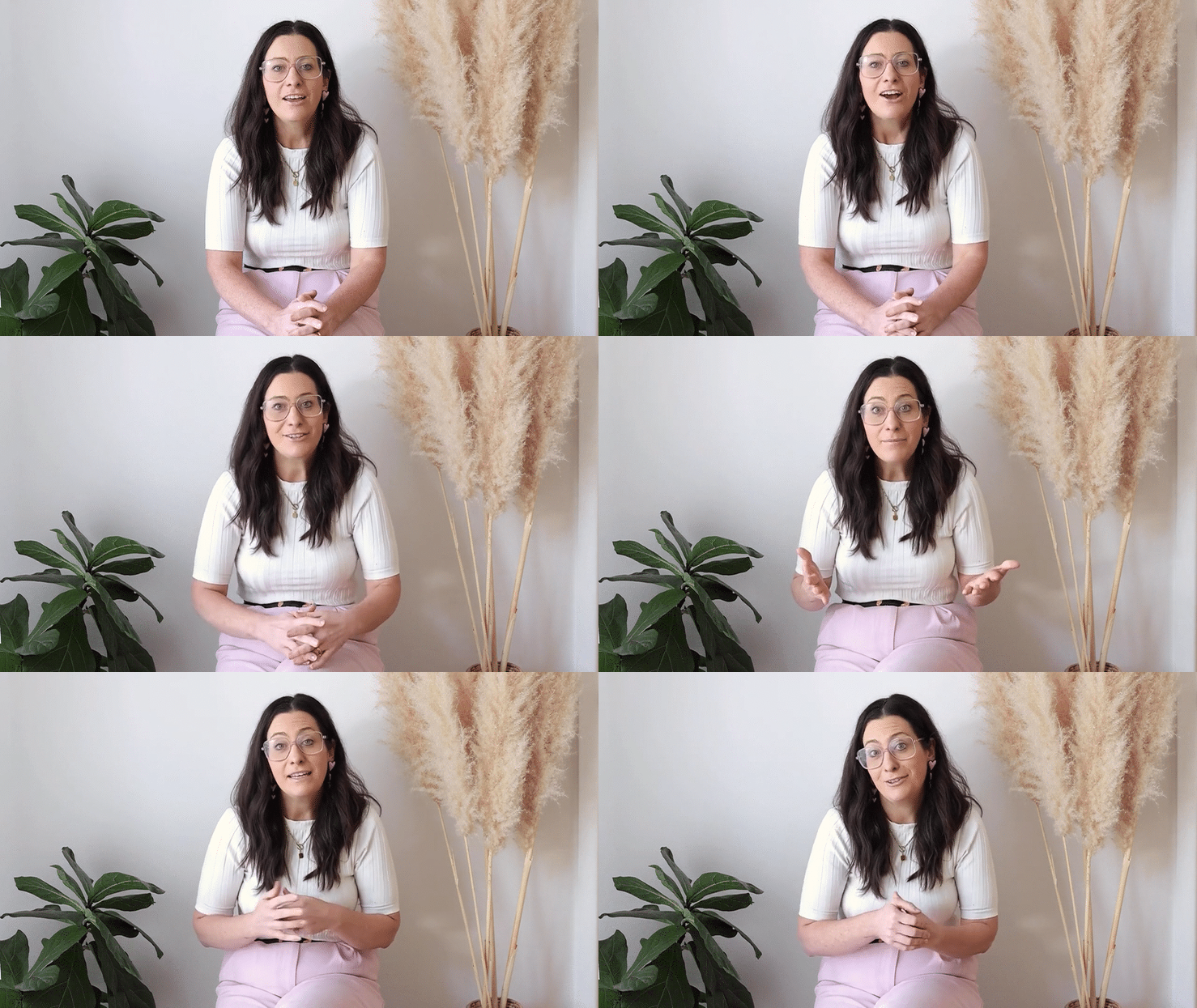
instructional Videos
Choc a bloc full of instructional videos for understanding your pelvic floor, diaphragmatic breathing and more…
education
Have all your questions answered regarding your postnatal body. What to expect and how to improve your overall body health.
13 week workout routine
Detailed weekly workout routines for supporting your Pelvic Floor, Upper, Lower and Whole body postnatal recovery.
This physiotherapist-designed, evidence-based course provides a comprehensive guide to exercising safely and effectively after birth. The content is structured to give you clear, practical education and support throughout your postpartum recovery, with a strong focus on pelvic health.
frequently asked questions
-
You can start the RESTORE program from week 1 postpartum, provided you feel ready to begin and have received medical clearance if required. If you're further along in your postpartum journey, that's absolutely okay too. You can start the program at any stage after having your baby.
The program is designed to support your recovery from the very beginning, starting with gentle breathing, reconnecting with your core and pelvic floor, and restoring mobility. From there, it gradually progresses to build strength, confidence, and function in a safe and structured way.
No matter when you begin, I recommend starting from Week 1 and working through the program in order, as each stage builds on the last. If you particularly enjoy a workout or feel you need a little more time at a certain stage, you're welcome to repeat it before moving on. The most important thing is to listen to your body, progress at a pace that feels right for you, and celebrate every step of your recovery.
-
For the exercises in this program, I’ve provided guidance to use weights between 1–5kg. These workouts are designed around higher repetitions, so I recommend choosing a weight that feels light to moderate for you.
The key is to select a weight that allows you to comfortably complete the full set or time allocation with good form and control. You should feel challenged, but not strained. As your strength improves, you can gradually increase the weight, always making sure you maintain good form.
-
Yes. Pelvic floor recovery is a key focus of this program. It has been specifically designed to progressively challenge and strengthen your pelvic floor as you move through the weeks. You’ll learn how to activate, relax, and strengthen your pelvic floor safely, helping with bladder control, core stability, and posture.
-
Not a problem at all! The RESTORE program is designed for women of all fitness levels, including those who are completely new to exercise.
The program starts with gentle breathing, mobility, and core and pelvic floor connection exercises before gradually building strength over time. You're encouraged to progress at your own pace, repeat workouts if needed, and take extra rest whenever your body needs it. The goal is to help you feel stronger and more confident, one step at a time.
-
Yes. Many women notice this feeling after pregnancy and birth. I have specifically designed this program to rehabilitate the core. We begin with gentle core connection exercises that help you reawaken those muscles, rebuild strength, and feel more in control of your body. We then progress to more challenging core exercises that help to heal abdominal separation.
-
Most sessions are 20- 25 minutes, and can be broken up into smaller sessions so they’re easy to fit in around feeding, naps, and everyday life. Consistency is more important than perfection, every little bit counts.
-
This program is all about moving with care and confidence. We start small, focus on breathing and posture, and give you simple tools to tell the difference between normal postnatal sensations and warning signs to slow down. If you are experiencing any discomfort or other issues its important to seek medical advice from your trusted physician.
-
In this postpartum program, there is a focus on safe, gentle, and effective movements that support your physical wellbeing after pregnancy. To help you get the most out of each session, a variety of simple, accessible equipment that enhances comfort, stability, and strength without putting undue pressure on your body.
Here’s a quick overview of the equipment you’ll be using throughout the class:
Yoga Mat or Towel: Provides a soft, non-slip surface for floor work, stretching, and relaxation.
Pilates ball or cushion
Resistance Bands: Ideal for building strength safely, especially for the upper body and glutes. This program includes both a long resistance band and a circular (loop) band. If you don’t have a loop band, you can simply tie the long band into a circle to create the same effect.
Light Hand Weights (1–5kg): choose a weight that feels challenging but manageable and where you can maintain good technique. I recommend lighter weights for upper body exercises and heavier weights for lower body exercises. Remember, you want to find a weight that feels challenging, but not impossible by the last 2-3 reps of the exercise, while still maintaining good technique.
Exercise Roller
-
If your birth or recovery has been more complex, a check in with your doctor or women’s health physiotherapist is recommended before starting will help you feel confident and safe.
-
Most women book in for a postnatal check with a women's health physiotherapist at around 6 weeks postpartum. This is a great time to assess your pelvic floor, abdominal muscles, scar healing (if applicable), and guide your return to exercise.
However, you don't need to wait until 6 weeks if you have any concerns. If you're experiencing symptoms such as bladder or bowel leakage, pelvic pain, heaviness or pressure, or you simply have questions about your recovery, you're very welcome to book an appointment earlier. Early assessment can provide reassurance and help address any concerns sooner.